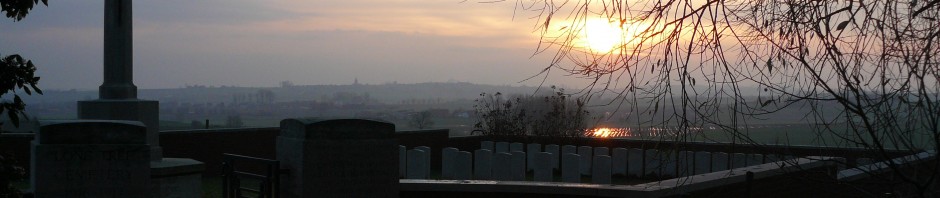

Because I shall never now visit the Dardanelles, and therefore will never get the opportunity to pay my respects at the numerous cemeteries on the Gallipoli peninsula that count the cost of Churchill’s folly in 1915, the least I can do is find a way of doing so by way of this website.

This post is not intended to tell the story of the Gallipoli campaign. Others have done that far better than I could. It will contain, however, enough information to make some sense of the whys and wherefores of the cemeteries that also tell the story far better than I. This post we shall take a look, using archive photographs and some long-forgotten booklets, at the burial sites on the Gallipoli Peninsula, then and, if not now, later.

This map shows the three Allied landings that took place on the Gallipoli peninsula, two on 25th April 1915, and the third on 6th August. Popular history remembers Gallipoli as an Australian campaign, but as this map shows, it was the British who bore the brunt of the invasion forces. And the bulk of the casualties. By the end of the campaign in January 1916, almost 30,000 British troops had died, along with over 10,000 Australians & New Zealanders, 1,300 Indians, and 10,000 French troops (figures courtesy of The Gallipoli Association), the first of whom had also landed on 25th April as part of the initial Allied landings.

The first landings on 25th April 1915 took place at the southern tip of the peninsula, the ‘Cape Helles Area’ marked on this map, and at the ‘Anzac Area’ marked further up the coast. The darker areas show the extent of the Allies’ advance inland over the course of the entire eight & a half month campaign. The scale comparison with Hyde Park (bottom left), for those of you who know it, is striking.

‘Map showing cemeteries on the Gallipoli Peninsula’. Well, not exactly, but it does show the cemeteries that catered for the British losses at Helles, at the south of the peninsula, at the time of the war’s end. After which many of the smaller cemeteries (black squares) were concentrated into other already existing cemeteries (red squares), and one entirely new cemetery was created (orange square). The blue circle marks the site of the Helles Memorial,…

…seen here newly constructed,…

…the panels yet to be added to the column facings,…

…the memorial shown here soon after its unveiling in 1924.

Panels in place. Almost 100 feet high and the principal British & Empire memorial for the Gallipoli campaign, the memorial also commemorates 20,956 men who died during the campaign but have no known grave, or were buried at sea.

Referring back to our map, the red square just five hundred yards to the east of the memorial marks the site of V Beach Cemetery,…

…seen here in its early days (left) and in more modern times (right) from the site of Turkish trenches looking down on the beaches. Beyond the fields and modern houses, the old Ottoman fort at Sed el Bahr (Seddülbahir) dominates the landing beaches stormed by the British on 25th April 1915.

Taken on 6th May 1915, this shot shows the fort once again on the left, with the steam collier SS River Clyde, now attached to land by a floating pier of small boats, on the far right. Men of the Royal Dublin Fusiliers, Munster Fusiliers & the Royal Hampshire Regiment were aboard the ship when it was deliberately grounded on 25th April,…

…the men inside disembarking through the holes pre-cut in the ship’s hull seen here, from where the gangplanks you can also see would lead them…

…onto moored lighters and small boats that, as the River Clyde had grounded some eighty yards from shore, still meant a wet and dangerous journey to the beach for men fully laden with equipment. This scene was taken with the bullets still flying. We are on board the River Clyde, and the clusters of men already on the beaches are sheltering from the Turkish machine gunners in the fort in the background and in trenches on the left. The lighter in the foreground is packed with dead and wounded men who got no further than the bottom of the gangway.

Later view from the Turkish front line trench looking down towards the killing ground, the River Clyde in the centre facing us, the fort on the left.

The River Clyde approaches the beach. An officer on the staff of General Sir Ian Hamilton, commander of the Mediterranean Expeditionary Force, who was on board, wrote in his diary, “6.22 am. Ran smoothly ashore without tremor. No opposition. We shall land unopposed. 6.25 am. Tows within a few yards of the shore. Hell burst loose on them. One boat drifting to north all killed. Others almost equally helpless. 6.35 am. Connection with shore very bad. Only single file possible and not one man in ten gets across. Lighters blocked with dead and wounded. 9.00 am. Fear we’ll not land today.”

They did, though, despite the losses, and the British would succeed in taking the fort and pushing the Turkish defenders away from the immediate vicinity of the beach. God knows how. You saw the earlier photo of the men sheltering on the beach.

In the weeks and months that followed, as the British attempted to advance and take Turkish positions that had been their objectives on that first day of the campaign, the River Clyde would remain in position, a constant target for Turkish artillery. Hardly surprising when you consider the hubbub of activity seen in this shot, taken from the prow of the River Clyde looking at ‘V’ Beach just a few days after the landings. And ‘V’ Beach, as we’ve seen, had its own cemetery,…

…photographed here at the war’s end. The two ships are the French battleship Massena and the French passenger ship Saghalien, both scuttled close to the River Clyde on 9th November 1915 to form a breakwater at ‘V’ Beach.

Begun soon after the landings, V Beach Cemetery was only used until mid-May 1915, and of the 696 burials within, 216 are identified, by far the majority of whom, 149, are Royal Dublin Fusiliers, although only twenty of those have known grave sites, the others remembered by special memorials. A dozen Royal Navy casualties are buried here, and thirteen bodies were brought in post-war.

Cross of Sacrifice & Stone of Remembrance at V Beach Cemetery soon after construction,…

…and in later years. On the right, the cemetery plan.

V Beach Cemetery, seen here in the 1960s, the ruins of the fort in the background. Throughout these Gallipoli posts I’ll give you the burial statistics for each cemetery, but rather than repeating myself each time, and as every cemetery contains a number of special memorial headstones, I shall simply list the number of memorials in most cases. These special memorials remember men who are believed, or known, to be buried among the unidentified burials within each cemetery.

Superb aerial shot of ‘V’ Beach and the mass of stores and supplies packed into the beachhead, the River Clyde at the bottom of the shot,…

…and here, a later German aerial photo, the two French ships now scuttled. The lack of human activity, and the fact that a German plane could fly so close, suggests this picture was taken in 1916, possibly very soon after the evacuation.

The River Clyde as the British left her, Turkish troops ambling along the foreshore, with piles of empty British shell cases in the foreground. And a bicycle.

A later shot of one of the many cemeteries that littered the peninsula at the end of the war, but whether Allied or Turkish I cannot tell, although I can find no mention of a British cemetery here, and the style seems unusual for a British cemetery. I think these are either Turkish graves, prisoners who died and were buried by the British, or, more likely, French casualties from when French troops were redeployed to Helles to assist the British. The River Clyde, shorn by now of much of her superstructure, remains in situ, as she would until removed in 1919. Despite the battering she had endured, she would serve as a tramp steamer in the Mediterranean into the 1960s. The round building on the right of the photo is the lighthouse, the remains of which are still there and can be walked around on Google maps, if you so wish, with the walls of the fort behind.

Panoramic view, looking south east, of ‘V’ Beach and the southern tip of the peninsula, the fort on the skyline, and the River Clyde on the right.

1,500 yards to the north west, the 1st Bn. Lancashire Fusiliers landed on ‘W’ Beach under heavy fire and fought their way off the beaches, establishing themselves some five hundred yards inland.

Lancashire Landing Cemetery, seen here at the end of the war in an original panoramic series of photographs, was begun on the first day of the campaign, 25th April 1915, and used until the Helles evacuation in January 1916.

Aerial view of Lancashire Landing Cemetery taken after the war’s end.

The Cross of Sacrifice at Lancashire Landing Cemetery (above), and a view of the cemetery in the 1960s (below), the Helles Memorial on the horizon, with the cemetery plan on the right.

According to the CWGC website the cemetery ‘contains the graves of over 80 men of the 1st Lancashire Fusiliers who died in the first two days following the landing’. There are, however, six identified men killed on 25th April buried in the cemetery, four of whom are Lancashire Fusiliers, and not a single man killed the following day. Indeed only ninety five of the 1,237 burials now in the cemetery are known to be Lancashire Fusiliers, but the cemetery is named after the landing beach which would forevermore – well, until the evacuation – be known as Lancashire Landing. After the war another ninety seven men were moved here from graves on the islands of Imbros (Imbroz) & Tenedos (Bozcaada), and the cemetery also contains seventeen Greek war graves. 135 of the burials are unidentified, and ten men are commemorated by name on special memorials.

The beaches at Lancashire Landing prior to the evacuation in January 1916.

The third red square on our map, this is Skew Bridge Cemetery, pictured at the end of the war,…

…and some time later, the cemetery walls under construction. Gallipoli wasn’t all rocky hills and precipitous crags. In fact, the landscape at the three different landing sites was quite different, as future posts will show.

Australian & New Zealand troops would land at Helles in May to support the British attempts to advance north from the beachheads. Here Australians rest before an attack on 8th May 1915, the third and final day of the Second Battle of Krithia.

The morning after. Views (above & below) taken on 9th May of what had been No Man’s Land prior to the Australian attack the previous day.

They would endure a torrid time, 2nd Brigade, for example, suffering 50% casualties, some of whom you can see lying in the fields here and in the previous photograph. They managed to advance five hundred yards.

Map of the Second Battle of Krithia, showing not only how none of the initial objectives of 6th May were taken, but also how the opposing trenches now stretched the width of the peninsula, with the British 29th Division left & centre, and the Corps Expéditionnaire d’Orient (C.E.O.), the French contribution to the campaign, on the right. Despite a Third Battle of Krithia in early June, the opposing forces would remain in roughly the same positions hereafter.

Skew Bridge Cemetery and the cemetery plan (inset). The first burial at Skew Bridge took place on 9th May 1915, the day following the second of the three Battles of Krithia, but by the end of the campaign only 53 burials had been made here. Post-war concentrations increased the size of the cemetery to 607, three hundred and fifty one of whom are unidentified. All but a dozen of the identified burials here are British, and a number are remembered on special memorials. The burials are believed to include the youngest British soldier killed during the campaign (also the youngest Allied serviceman to be buried on the peninsula), who is remembered on one of the special memorials. Drummer Joseph Aloysius Townsend, East Lancashire Regiment, was fifteen when he was killed in action on 18th May 1915; an even younger Australian private, James Martin, died of typhoid on a hospital ship and was buried at sea.

Among the cemeteries concentrated into Skew Bridge Cemetery post-war were this handful of graves known as Backhouse Post Cemetery,…

…and these graves at Romanos Well No. 1 Cemetery,…

…and Romanos Well No 2 Cemetery.

The problem at Helles was the extent of the Allied advance – the dark shaded area – and the troops’ inability to get any further, mainly because of incompetent leadership that failed to grasp the necessity for speed as soon as the beaches had been consolidated. Bear in mind that the town of Krithia and the heights of Achi Baba, both first-day objectives, would remain in Turkish hands throughout the whole eight and a half month campaign. There were actually five landing beaches, four marked on the map above and a fifth on the east of Morto Bay (‘S’ Beach), and all, despite the carnage at ‘V’ Beach & Lancashire Landing (‘W’ Beach), were defended by far fewer Turkish troops than the British believed. Indeed the beaches at ‘X’ & ‘Y’ were unprotected by barbed wire and the defenders had no machine guns, but this was not exploited, and the British found themselves embroiled in months of costly fighting once Turkish reserves arrived, all to attempt – and fail – to achieve what had been the objectives of 25th April.

Moving north up our map, Skew Bridge Cemetery now at the bottom, and the two Romanos Well cemeteries marked close by, the next cemetery is Pink Farm Cemetery, but first, to the west of Pink Farm, note Gully Beach, on the coast on the far left, and the long dotted line that leads north east, parallel to the coastline, to the top of the map. This is the Saghir Dere (dere meaning stream), which flowed, at least in the winter months, down what the Allies referred to as Gully Ravine, and which saw fierce fighting through the summer as the British inched their way forward.

The entrance to Gully Ravine. There were a number of small cemeteries along the length of the gully, all removed and concentrated elsewhere post-war, including…

…Gully Head Cemetery,…

…Gully Ravine No. 1 Cemetery,…

…Gully Ravine Nos. 2 (left) & 3 (right),…

…and Gully Ravine Nos. 4 (left) & 5 (right). We shall see where these graves were moved to later.

Some six hundred yards inland from Gully Beach, this is Pink Farm Cemetery under construction after the war.

By the end of the Gallipoli fighting, three small cemeteries had grown up around Sotiri Farm, known as Pink Farm to the Allies on account of the colour of the local soil. These two shots show Pink Farm No. 2 Cemetery,…

…and this is Pink Farm No. 3 Cemetery, as they were at the end of the war.

To quote the CWGC website, ‘Three cemeteries eventually grew up around the farm, the first begun after the First Battle of Krithia (28 April 1915)’. I don’t really understand that sentence; there are eighteen identified men buried here who died on the first day of the campaign, 25th April, and four who died the following day, after which the next burials were indeed men killed on 28th April. Three of them.

There were three battles of Krithia, and in total eleven identified men who died on the dates of those battles are buried here. Battles in which British casualties totalled some 12,000, and Australian casualties close to 2,000. That doesn’t seem to tell the real story of this cemetery, does it, although I don’t consider that I have the expertise, nor the time, frankly, to uncover the true story in the way that I might attempt were we in Flanders?

After the war, the three cemeteries were concentrated into one on the site of Pink Farm Cemetery No. 3, and men were brought in from battlefield graves and other cemeteries. Today, 602 men are buried or remembered in the cemetery, all but a handful British. 250 of the burials are unidentified, although 219 of them are remembered by name on special memorials.

29th Divisional Cemetery, one of the cemeteries later consolidated into Pink Farm Cemetery,…

…as were both 52nd Divisional Cemetery,…

…and Aerodrome Cemetery.

And as we have been talking about the battles of Krithia, you can decide for yourselves the authenticity of these photographs,…

…which purport to show men of the 6th Bn. Manchester Regiment charging the Turkish lines on 4th June 1915 during the Third Battle of Krithia.

Redoubt Cemetery, the cemetery plan on the right, was named after the line of Turkish strongpoints crossing the southern end of the peninsula south of Krithia, and begun by Australian troops in early May 1915, being used thereafter until the evacuation.

Greatly enlarged after the war, 2,027 men are now buried or commemorated here, 1,393 of whom are unidentified, although the names of 349 men are commemorated on special memorials. All but around twenty of the identified burials are British.

Among the cemeteries concentrated into Redoubt Cemetery were these graves at Brown House Cemetery,…

…and these at White House Cemetery.

Twelve Tree Copse Cemetery is the only wholly post-war CWGC cemetery in the southern part of the peninsula, the men buried here, by far the majority British, brought in from a number of other cemeteries* that were then closed down, and from isolated battlefield graves. There are 3,360 men now buried or commemorated in the cemetery, 2,226 of whom are unidentified; over 650 of these are remembered on special memorials.
*Some quite large. Geoghegan’s Bluff Cemetery, for example, contained 925 graves associated with fighting at Gully Ravine in June & July, and Clunes Vennel Cemetery over five hundred, all moved post-war.

If you remember the six cemeteries I showed you earlier in Gully Ravine, all were later concentrated into Geoghegan’s Bluff Cemetery, seen here in an original panorama, before being moved, for a second time, to Twelve Tree Copse Cemetery.

The graves in Ghurka Bluff Cemetery would later be concentrated into Twelve Tree Copse Cemetery,…

…as would those from Trolley Ravine Cemetery,…

…and those from Y Ravine No. 1 Cemetery. How many of these men now lie in unidentified graves at Twelve Tree Copse, I wonder? All of them?

Today, the cemetery also contains the Twelve Tree Copse (New Zealand) Memorial, one of four such memorials on Gallipoli to commemorate New Zealand soldiers who fell on the peninsula and whose grave sites are unknown. The memorial here remembers, by name, 179 New Zealanders who died outside the limits of the New Zealand forces on Gallipoli.

The cemetery (cemetery plan on the right) is situated close to the front lines as they would remain after the final British advance in early July.

A later shot. With trees! My guess would be twelve of them.

By the end of the Gallipoli campaign there were at least forty cemeteries of various sizes in the Helles area, most listed here (although there is no mention of a third Pink Farm cemetery), the burials within all later concentrated into the six cemeteries featured in this post.

And there was, and still is, a lone British grave at Helles. Lieutenant Colonel Charles Hotham Montagu ‘Richard’ Doughty-Wylie, VC, CB, CMG, Royal Welch Fusiliers, aged 46, was attached to General Sir Ian Hamilton’s headquarters at the start of the Gallipoli campaign. On 26th April he led a successful attack to clear the Turks from strongly entrenched positions in the village beyond the fort. Killed in the attack, he earned not only a Victoria Cross, but the privilege of being the only Allied soldier buried in a lone grave who was not later moved to one of the cemeteries. I believe his wife had much influence on this decision. And if you go back to our map of the foot of the peninsula, towards the start of the post, a small green dot, that you may or may not have noticed, marks the site of his grave.

Three British Army chaplains – Church of England, Roman Catholic & Presbyterian – holding a burial service.

The clergy themselves were far from immune to danger. This is the grave of Father William Joseph Finn (pictured). Finn, who landed with the Royal Dublin Fusiliers, is believed to be the first Roman Catholic priest killed in the Great War. He was wounded in the chest while giving absolution to a dying man on V beach on the day of the landings, and died later the same day. Today he shares a grave in V Beach Cemetery with a lieutenant colonel of the Royal Dublin Fusiliers killed on the same day, perhaps the very man he was helping when he was hit.

‘A British soldier’s farewell to his pal: lingering for a last glance at a dead comrade’. Well, maybe, but certainly a sad shot taken at the foot of Gully Ravine. Next, we shall look at the cemeteries of Anzac.
My Grandfather, Richard Henry Polglase, was lost when the troopship Royal Edward was torpedooed. His name is on the Cape Helles Memorial.
Yes, of course. Thanks Kathryn, as always.
Hi MF,
Sorry its been a while since my last reply, though am still reading all your new posts !
Another excellent one here as ever, even from many miles away !
My grandad and one of his brothers landed at Suvla Bay on 28th August and remained until evacuation on 3rd January. They were both (as far as I know) in Battery A of LV Brigade RFA attached at the time to 10th (Irish) Division.
Never been to Gallipoli sadly, but maybe one day !
Glad to hear it Jon. And thank you. We shall move on to Suvla in due course.
I also had no idea that the River Clyde had such a long and eventful existence after the landings. I had assumed that it was destroyed/ broken up in situ at some point or other.
I never knew that either. Like you, I assumed it would have been scrapped.
Thank you for this Magic. I am not aware of any relatives who had fought at Gallipoli, but the campaign has always fascinated me. I feel you are correct, somehow nowadays it seems to me to be seen as a majority ANZAC affair. I guess through prominent media portrayals over the decades and just not the same coverage here in the UK. I know it’s a really big thing for Aussies and Kiwis particularly on ANZAC day itself.
Side note: Not sure how Gallipoli is commemorated by the French and their Empire either. Truth is, it was a tragic sacrifice all round, Turkish too.
It is not the easiest of places to visit compared to France or Flanders. I shall have to make some plans to do this.
Cheers Brian. My Grandpa was sent to Salonika after he was wounded on the Somme. As far as I know there are plenty of Turkish memorials on Gallipoli but few cemeteries. And there is just the one French cemetery for all the French casualties. I might look into all this at some point. Thanks mate.
Thanks M for this very informative post, sorry to hear you feel you won’t visit Gallipoli now. I visited over 2 years ago on a battlefield tour which made it very accessible, your report has helped to widen the experience.
Not sure you can totally blame Winston Churchill though.
Ha ha! Churchill, Kitchener, Hamilton, and so on down the line. But would any of it have happened without Winston? Good to hear this made sense to someone who has visited. Thanks as ever. Be in proper touch when I get a new computer – can’t even use the keyboard any more on this one!! On-screen only – very tedious typing with a mouse.
Good to hear from you M, wondered about your silence. Hope you get a new computer soon. Didn’t know you could type with a mouse
Opinion is divided on Winston
Yep, on-screen keyboard. But it’s still a pain in the youknowwhat. I might bite the bullet tomorrow. Oh, and I am actually quite a Winston fan, but not at this stage of his career.
So did you bite the bullet? Hope so and your back to normal from a typing point of view of course Always loved Winston that won’t change but yes I’m sure he made some mistakes as do we all, we’re just not affecting world changing events
We live in a world with far too much choice. Hence I am still looking……….