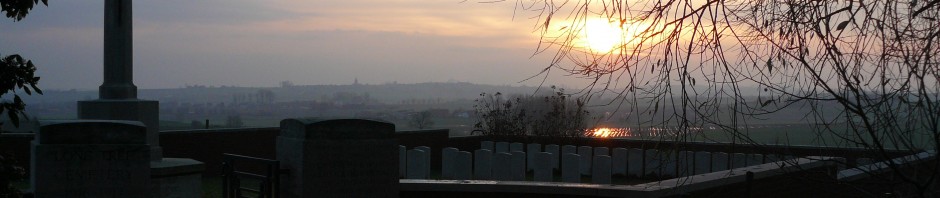

On the one hundred and tenth anniversary of the opening day of the Battle of the Somme, a day when close on 20,000 British soldiers would lose their lives – this is Ancre British Cemetery, near Beaumont-Hamel – allow me to introduce you to some more men who survived their war experience, if not wholly.

These three men are Royal Sussex Regiment veterans, Albert on the left, Arthur in the centre, and, on the right, Frank.

Frank had served as a private since December 1915, just prior to the introduction of conscription, one of many men who joined up in advance of the new legislation. Blown up, and suffering thereafter from shell shock, he would be discharged from the Army in July 1918 as medically unfit, although he would live until 1960.

Royal Warwickshire Regiment veterans. Albert, on the left, was one of many soldiers who suffered from ‘rheumatic fever’, or rheumatoid arthritis, in his case from 1915. He would not be discharged until late 1919 after three and a half years’ service, so he was presumably capable of carrying out his duties satisfactorily, but his condition would worsen in the post-war years. William (centre) joined up in the spring of 1915 and would suffer a wound during the Battle of Passchendaele in 1917 necessitating the amputation of his right leg below the knee. Fred, on the right, suffered severe sunstroke at Gallipoli in October 1915 which lead to paralysis in all his limbs; he served for just eight months, and would use a wheelchair for the rest of his life. His death in 1940 would be caused by disseminated sclerosis, a chronic, progressive disease of the central nervous system.

Royal West Kent Regiment veterans, from left, Percy, George, and two Williams. George was twice wounded during the Great War, first, in the spine, in October 1914 near Thiepval on the Somme, and the second time, which ended his army career, in July 1916 when he received serious wounds to his right arm. He would die in 1945 aged 59 having suffered a stroke some ten years earlier. The William on the far right was a lieutenant in the West Kents – he had been a journalist before enlisting, or more likely being called up, in late 1916. He received the Croix de Guerre & the French War Medal, but was another diagnosed, as so many who fought seem to have been, with disseminated sclerosis later in life, the origin of which was said to be in 1920, the year he was discharged from the army. He was hospitalised for the last dozen years of his life before he died in 1946.
Remember those who survived