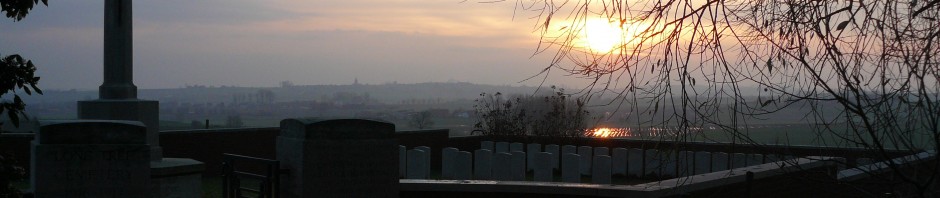

Once known as Farnborough Church Burial Ground, the cemetery is an extension of St. Peter’s churchyard, beyond the distant trees.

Now known as Victoria Road Cemetery,…

…it didn’t take long to find war graves,…

…seven CWGC headstones, all Great War casualties, visible in this shot. We begin on the far right,…

…with the grave of 2nd Air Mechanic F. Boxall, Royal Air Force, who died on 24th February 1919, aged 19. The Royal Aircraft Factory was sited in Farnborough during the Great War, so I dare say a number of air mechanics can be found in the cemeteries hereabouts, and the town was the headquarters of the military wing of the Royal Flying Corps fr0m July 1914. The Farnborough International Airshow takes place here each year to this day.

Lance Corporal Thomas Rowe, Hampshire Regiment, who died on 10th January 1919, aged 45.

Member Emily Stokes, Women’s Royal Air Force, who died on 18th November 1918. The W.R.A.F. had been established on 1st April 1918, the same day the Royal Flying Corps became the Royal Air Force.

Another 2nd Air Mechanic, Reginald Frank Nye, Royal Flying Corps, died of cerebro-spinal meningitis on 1st March 1918.

Stoker 2nd Class Herbert William James Liford, Royal Navy, H.M.S. “Victory”, who died on 7th February 1917.


Three more Great War graves,…

…this the rather fancy headstone of Captain Hugh Archibald Renwick, South Wales Borderers, attached Royal Air Force, killed in a flying accident along with his pilot, Captain Oswald Horsley, on 19th August 1918, at Arborfield in Berkshire.

His headstone says he was killed ‘on duty in an experimental flight’, one eye witness stating that ‘At first it was going very smoothly. Looking up again I saw a large cloud of vapour come out of the back part. A portion of the wing on the left-hand side seemed to come away. There was a kind of explosion, and the machine seemed to lift a little. I could hear the breaking of the machine, which went spinning sideways and then came to earth. Both the officers were dead.’ Renwick, aged 26, died of a fractured skull, and Horsley, aged 28, a dislocated neck; he is buried in Steep, also in Hampshire, around twenty miles from here.

Boy 2nd Class A. E. Ferris, Royal Navy, H.M.S. “Impregnable”, who died on 23rd October 1918.

Flight Serjeant W. G. Amos, R.A.F., who died on 10th March 1919 aged 35.

Serjeant Edward George Grove, R.A.F., who died on 2nd November 1918 aged 23. Another mechanic.


Able Seaman John Victor Charles Etheridge, Royal Navy, H.M.S. “Minotaur”, who died of phthisis (pulmonary tuberculosis) on 11th September 1917 aged 21.


Stoker 2nd Class William John Andrews, Royal Navy, H.M.S. “Amphritite”, who died on 20th September 1916 aged 18.

Regimental Serjeant Major John Thomas Parker D.C.M., Manchester Regiment, who died on 16th April 1916 aged 40.

Parker (pictured) was awarded his D.C.M., gazetted on 1st April 1915, ‘for gallant conduct and good service throughout the very heavy fighting in which the Battalion has been engaged’,…

…although he would have known considerably earlier, this 2nd Bn. Manchesters’ war diary extract dated 8th February 1915. Parker would be discharged as medically unfit in late November 1915 before his death a few months later.

Driver S. F. Reeves, Army Service Corps, who died of pneumonia on 21st February 1915 aged 25. Long-time followers of this website will be well aware that the Army Service Corps did not receive its ‘Royal’ prefix until late November 1918, a few weeks after the Armistice, and thus this headstone should really say simply ‘Army Service Corps’.

The grave of Frederick James Andrewartha, who served under the name of Company Quartermaster Serjeant Andrews, Royal Berkshire Regiment,…

…and who died of cerebro-spinal meningitis on 26th February 1915, aged 45.


Private Frederick Richard Warren, R.A.M.C., who died on 3rd December 1915 aged 21.

‘Victoria our Queen’. Front.

And back.


Serjeant James Troughton, Royal Army Service Corps, who died on 28th April 1921 aged 36, his headstone correctly inscribed with the ‘Royal’ prefix.

Panoramic views (above & below) of the cemetery,…

…the cemetery entrance beneath the tree furthest left. Just behind us,…

…two Second World War graves, those of Lieutenant Leonard George Tunbridge, Hampshire Regiment, who died on 13th April 1942 aged 25,…

…and Private Frederick Leslie Southwood, Corps of Military Police, who died on 16th June 1944.

However, there are, evidently, twenty four Great War burials to be found here, so I failed to find eight, most likely all private, non-CWGC headstones. Then again, this was an unplanned visit with no prior research, so I didn’t do too badly.
Magic
I used to go to the Farnborough Air show every year before moving to Cornwall
The cemetary houses quite a selection of service representation especially as it was always an aviation connected town.
How was your trip to recharge batteries in cornwall ?
Regards
Kevin
Well, the last airshow I was at is documented here: https://thebignote.com/2015/08/30/the-old-the-new/
if you’re interested, Kevin. And, yes, a fine week doing absolutely nothing apart from watching the House Martins in the eaves and the World Cup on the telly. Did no exploring – churches, churchyards etc – at all as basically I’ve visited most in the past. I have made many a trip to Cornwall over the last twenty years.
Magic
The pics of the airshow are great and ironically the DC2 that you feature on is connected with my son Neil. Back in the 1990’s whilst at school he did a work attachment at North QWealds airfield with a company named Aces High Flying Museum. They owned that actual Dakota. He got to work on it and as a treat at the end of his attachment was given in a proving flight. I have a couple of pics including him in co pilots seat where he spent the flight.
I’m not sure how to attach pics in this box perhaps you could assist. Anyway so much did he enjoy the work attachment he passed his apprenticeship as an aeronautical engineer which many years later he is still doing. He also met David Gilmour Pink Floyd fame who owned several WW2 aircraft in the next hanger to where he worked.
Kevin
Well there’s a coincidence. I was thrilled, as you will have realised, with the Dakota. And here’s another coincidence. My missus’ son worked on Gilmour’s tour last year, from which I now have a cool crew-only jacket. Cheers Kevin – appreciated, as always. I can email you – I have your address – if you give me permission, and you can then mail me any pics.
Magic
Yes please email me and I will send you the pics
Kevin
You have been mailed – check yer Spam if necessary.