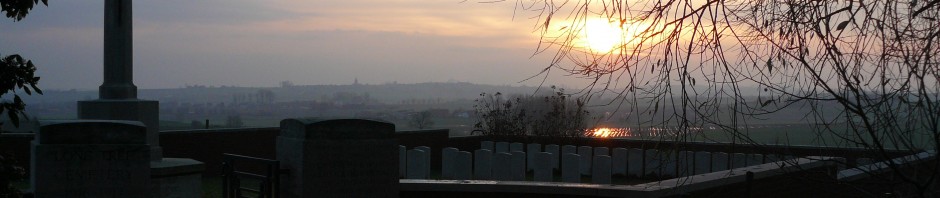

There was a time when the state of today’s CWGC cemeteries was not quite so immaculate.

So how did we get from here (Essex Farm Cemetery in the immediate post-war years)…

…to here (Essex Farm Cemetery in the 21st Century).

On 24th January 1918 this report was presented to the Imperial War Graves Commission, and if you have never read it, here’s your chance (it’s a pdf): The Kenyon Report. And no, I do not intend to rewrite the report in this post, but we shall look at how the headstones that we see today came about. What is clear from the report is that the question of headstone design had yet to be finalised,…

…as this letter, also dated 24th January 1918, confirms. And although this document relates specifically to The Queen’s (Royal West Surrey) Regiment, I think one can conclude that every British regiment was contacted by the IWGC at this time, because attached to the letter,…

…is the IWGC memorandum referred to, outlining the plan for the cemeteries,…

…along with a list of those involved in the decision-making including, the final name on the list and the man who commissioned the report, that of Brigadier General Fabian Arthur Goulstone Ware C.M.G., founder of the Graves Registration Commission in 1915, which became the Imperial War Graves Commission in 1917, and is now the CWGC.

These are the specimen designs referred to in the memorandum,…

…which I have shown you before on their own, a good few years ago now,…


…along with an additional example, specifically designed for The Queen’s, which I haven’t. Shown you, that is. And I have said this before too, but it’s interesting that most of these designs state the generic cause of death, which, if you consider it, would surely have proved to be an administrative impossibility had one of these designs been chosen.

Anyway, here’s the attached response from the major commanding The Queen’s 2nd Bn. who, it appears, was less than impressed.
 And subsequently, on 14th November 1918, after consultation with the several hundred regiments that made up the British Army of 1918, an addendum was added to the Kenyon Report that included the above points with regard, specifically, to the design of the headstones to be erected in the cemeteries.

Which is how we ended up here; a swathe of identical headstones at Etaples Military Cemetery on the Channel coast.
Thank you as always for this post. One thing that stood out for me was that they appears to no female membership of the groups despite the fact it was wives and mothers who were most effected by deaths of those being commemorated. It also appears that the pride in the regiment was more important than details of casualties.
Thanks Alan. Fair points. Signs of those times, I think.